Breaking News




Popular News




Enter your email address below and subscribe to our newsletter
 Bynewtimes
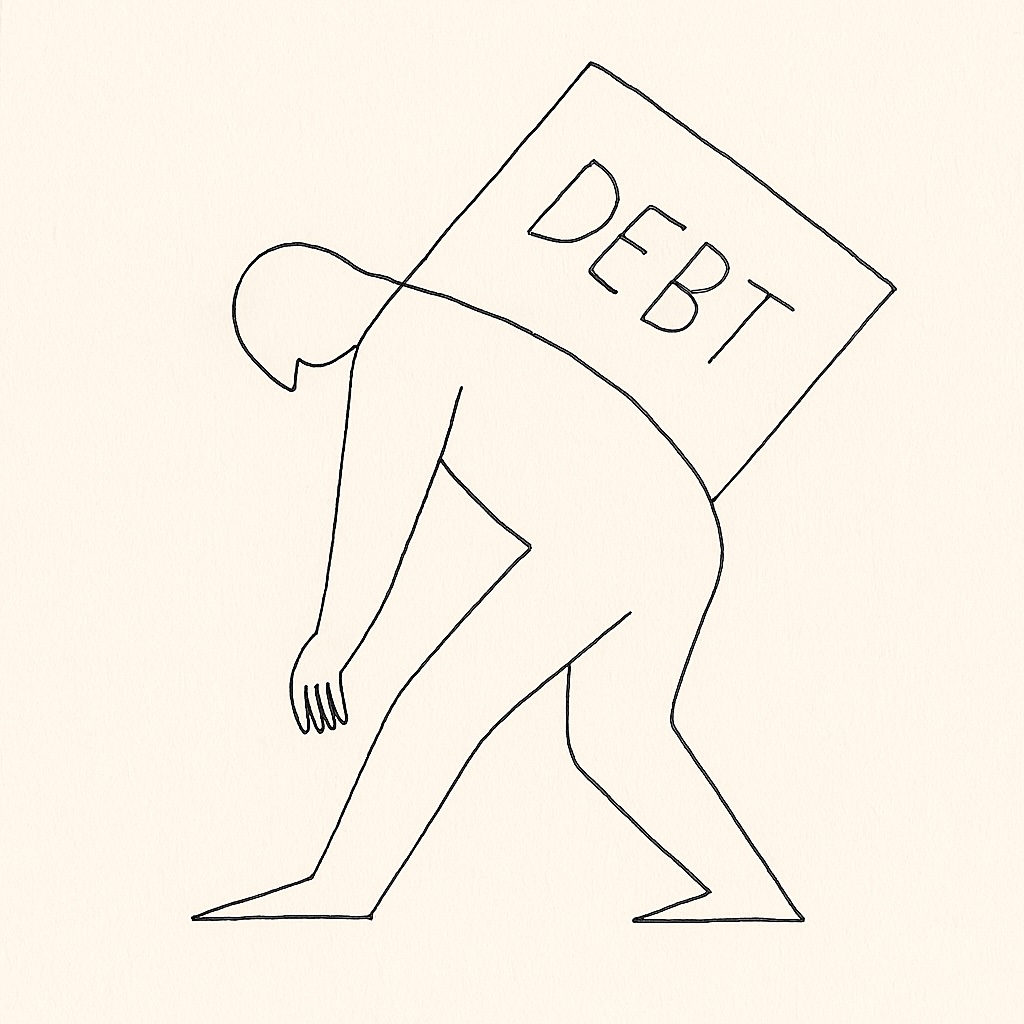
Government debt is one of the great paradoxes of modern finance. Most households and companies accept that debt must eventually be paid down; insolvency looms if it is not. Nations, however, live by different rules. France has not recorded a budget surplus since 1974, running a deficit every single year for half a century. Yet far from facing bankruptcy, Paris continues to borrow at relatively modest rates on the bond markets. The story of how this is possible reveals the machinery of modern finance: the central role of government bonds, the faith of investors, and the interplay of risk and reward that extends even to countries as volatile as Argentina.
Part I: The Case of France — A Nation in Permanent Deficit
France is the world’s seventh-largest economy, but its public finances have long been in the red. Since Valéry d’Estaing’s presidency, the French state has spent more than it raised in taxes every year. The last surplus was in 1974; since then, deficits have become entrenched.
Today, France’s general government debt stands at around 113% of GDP, amounting to over €3.3 trillion. Its annual deficit remains close to 5% of GDP, far exceeding the EU Stability and Growth Pact’s 3% limit. By comparison, Germany maintains a debt-to-GDP ratio around 65–70%, and the eurozone average hovers just below 95%.
Yet despite this half-century of deficits, France faces no queues at its treasury windows. Investors willingly purchase its government bonds – the Obligations Assimilables du Trésor (OATs) – and yields remain manageable, at around 2.7–3.0% for 10-year maturities. How can a state that has not “balanced its books” in living memory still borrow so easily?
The Machinery of Borrowing
The answer lies in the global bond market, the circulatory system of modern finance. Governments fund themselves by issuing bonds – promises to repay investors with interest after a set period. Unlike households, which must eventually pay down mortgages, governments rarely repay debt outright. Instead, they roll it over: when one bond matures, they issue another to cover both repayment and ongoing spending needs.
For investors, bonds serve multiple purposes. They are considered safe compared to corporate debt, they are liquid and easily tradable, and they serve as the collateral on which vast layers of the financial system rest. Sovereign bonds are the world’s safe assets, and investors – from pension funds to central banks – must hold them. France benefits from this structural demand.
Who Buys Government Bonds?
The buyers of French debt come from every corner of the financial world. Domestic banks and insurers hold large volumes of OATs because regulations require them to keep high-quality liquid assets on their balance sheets. International investors, from American hedge funds to Asian sovereign wealth funds, also purchase French bonds, regarding them as secure and easily tradable. And then there is the European Central Bank, which over the past decade has accumulated hundreds of billions of euros in sovereign debt through its quantitative easing programmes.
What sustains this market is trust. Buyers know that French bonds are liquid, that Paris has a long record of honoring its obligations, and that in a crisis the ECB stands behind the eurozone’s debt markets. This web of confidence means that even a state running deficits for fifty years can always find lenders.
Why Investors Lend to Perpetual Deficit-Runners
At first glance, lending to a state that never runs a surplus seems illogical. Yet three factors sustain confidence. France’s credibility is unquestioned; it has never defaulted in the modern era and retains the power to tax one of the largest economies in the world. Debt sustainability is judged not by whether the stock of debt ever falls to zero, but whether it remains stable relative to GDP. And finally, investors often prefer modest returns from a trusted borrower to higher returns in volatile or unstable markets. France may be indebted, but it is indebted in a predictable and orderly fashion, which is often enough.
How Investors can get involved
For Australian investors, the path into government bonds looks rather different from Europe or the United States. Canberra makes Treasury Bonds and Treasury Indexed Bonds available on the Australian Securities Exchange (ASX), where they trade like shares in parcels as small as one hundred dollars. This makes them accessible to ordinary savers who want fixed, semi-annual coupon payments and the certainty of government backing. Investors do not walk into a bank branch to buy a bond; instead, they do so through a broker, just as they would purchase equities.
The attraction lies in their stability and transparency. A retiree in Hobart or Sydney who buys a five-year Commonwealth Treasury Bond knows they will receive two coupon payments each year and the full principal at maturity. For those concerned about rising prices, the Treasury Indexed Bond adjusts payments in line with inflation, preserving real purchasing power.
But what if an adventurous Australian saver wants exposure beyond Canberra’s bonds? In theory, they can buy foreign sovereign bonds too — including those from high-yielding but risky markets such as Argentina or Brazil. Doing so requires an international broker that provides access to emerging market debt. The practical hurdles are higher: minimum investments are larger, transactions are in foreign currency, and liquidity is often thin. Exchange-rate risk looms large. A 10% annual coupon from Brazil can vanish in real terms if the real depreciates against the Australian dollar. More cautious investors may prefer to access such markets through global bond funds or ETFs, which pool risk across multiple countries. For the truly bold, however, nothing stops an Australian from owning Argentine peso bonds; the challenge is having the nerves — and the wallet — to stomach the risk.
Beyond the Safe Havens — The Lure of Argentina
If France represents the steady, predictable debtor, Argentina embodies the other extreme. A nation with chronic inflation and a history of defaults, Argentina must offer investors extraordinary yields to attract capital. In 2025 it issued a five-year peso bond at nearly thirty percent, while shorter maturities paid rates in the twenties.
These numbers dazzle on paper. But investors know they conceal enormous hazards. Inflation can run into triple digits, wiping out real returns despite the coupons. The peso often collapses in value, ensuring that foreign investors holding local-currency bonds lose purchasing power when converting back into dollars or Australian dollars. And default remains a constant spectre: Argentina has restructured its debt nine times since independence, most recently in 2020. Even dollar-denominated issues are not immune, for governments can change legal terms or impose exchange restrictions.
Buying Argentine bonds is less an act of steady investment than a speculative gamble. Some hedge funds – dubbed “vultures” – specialize in buying distressed debt at deep discounts, betting they will recover more than they paid after a restructuring. For individuals, the route is either through international brokers or via funds that spread holdings across multiple emerging markets. The potential for outsized gains exists, but so too does the likelihood of painful losses.
The Carry Trade — Turning Yield Differentials into Profit
High-yield sovereign bonds are also central to the carry trade, a strategy that exploits interest rate differentials between countries. Investors borrow in currencies with very low rates – such as the Japanese yen – and invest in higher-yielding assets abroad. The profit lies in the spread between the cost of borrowing and the return on the bond.
The arithmetic is simple. Borrow yen at half a percent, convert into Brazilian reais, and buy a government bond yielding thirteen percent. If the currency exchange rate holds steady, the investor pockets the difference. But if the real depreciates against the yen, the gain evaporates or becomes a loss. The carry trade thrives in calm global conditions but unravels violently when currencies move or when central banks raise interest rates.
The Cost of Debt — Interest Payments
For all governments, running permanent deficits comes at a price. Interest payments consume ever larger slices of national budgets. France paid around forty-eight billion euros in 2023 just to service its debt; by 2026 this is forecast to rise above sixty-six billion. These sums are not trivial: they represent money that could otherwise fund hospitals, schools, or infrastructure.
In an era of rising interest rates, the burden grows heavier. Servicing costs matter as much as the headline debt figure, for they determine whether a government’s finances remain sustainable. A country can live with high debt if its borrowing costs remain low. But if yields rise sharply, even wealthy nations face pressure.
Why Bonds Endure
Despite their risks, government bonds remain the backbone of global finance. They anchor the banking system, providing the collateral that underwrites trillions of dollars in loans. They diversify portfolios, offering stability alongside the volatility of equities. And in times of crisis, they become the ultimate refuge. Investors sell shares and commodities, but they flock to U.S. Treasuries, German Bunds, and even French OATs, driving prices up and yields down.
The endurance of government bonds lies in this paradox: they are both instruments of state indebtedness and the world’s safest assets. Even when issued by a country like Argentina, they perform an essential function, signalling the market’s judgement on creditworthiness and setting the price of risk. For cautious retirees in Sydney and aggressive hedge funds in New York alike, sovereign bonds remain indispensable.
The Investor’s Choice
For the individual investor, the decision comes down to balancing safety and yield. Australian Treasury Bonds offer certainty at modest returns; French OATs or U.S. Treasuries provide global diversification with slightly higher yields; Argentine or Turkish bonds dangle extraordinary coupons at extraordinary risk. Currency swings can turn profits into losses overnight, while inflation can quietly erode real value. Inflation-linked bonds mitigate some dangers, but not all.
Debt Without End?
The fact that France has not run a surplus in fifty years is not an aberration but a window into how modern states operate. Perpetual deficits are sustained by the credibility of governments, the hunger of investors for safe assets, and the machinery of the bond market. But this equilibrium is fragile: it rests on confidence, interest rates, and the perception of risk.
At one end of the spectrum, France and Germany borrow cheaply despite red ink; at the other, Argentina pays double-digit yields just to entice lenders. For Australian investors, the options span this spectrum: from steady Commonwealth Treasury Bonds available on the ASX to speculative emerging-market paper accessed through international brokers. The choice is one of temperament as much as economics.
Government debt, in short, is not a path to insolvency but a permanent condition of the modern world. Nations live in deficit because the system allows it – and because investors, in their quest for safety or yield, demand it. The bond market, vast and intricate, is the arena where this uneasy pact between borrowers and lenders plays out, day after day, year after year.

 English