
In 1975, Canadian novelist Hugh Hood dropped a strange word into his writing: cryptocurrency. At the time, it was little more than a literary curiosity — a mash of “crypto” (hidden, coded) and “currency” (money). There was no blockchain, no Bitcoin, no wallets in your pocket. Just a word waiting for a technology.
Fast forward to the early 1980s. Computer scientist David Chaum began sketching out ways of using cryptography to protect privacy in payments. His company DigiCash launched “eCash” in 1989, a bold attempt at digital money. It failed commercially but planted the seed. Through the 1990s and early 2000s, projects like E-gold, b-money, and bit gold kept the idea alive, but all had a central flaw: they relied on companies or governments.
Then came Bitcoin. In October 2008, an anonymous figure — Satoshi Nakamoto – published a white paper describing a “peer-to-peer electronic cash system.” On 3 January 2009, the first block was mined. For a year, Bitcoin was little more than code swapped among hobbyists. By October 2009, someone finally worked out an exchange rate: 1,309 BTC for US$1 (based on electricity costs). In May 2010, the famous “Bitcoin pizza” was bought for 10,000 BTC, then worth about $41.
Crypto markets are volatile
Bitcoin has since lived in cycles that would make even the most seasoned roller-coaster fan queasy. In 2011 it surged from $1 to $31 before crashing back to $2. By 2013 it had leapt from $13 to over $1,100, only to collapse again. The 2017 run took it from $1,000 to nearly $20,000, followed by a brutal comedown to $3,000. The wildest ride came in 2021, when Bitcoin reached $69,000 before the Terra/Luna implosion, the collapse of FTX, and the failures of crypto lenders pushed it down to $16,000 in 2022.
The great rebound of 2024–2025 was powered by two forces: April 2024’s block reward halving, which cut the supply of new bitcoins in half, and the launch of spot Bitcoin ETFs in the U.S. By mid-2025, Bitcoin was holding steady in the $60,000–70,000 range. Each run has been bigger than the last, cementing Bitcoin’s place as the world’s first truly decentralised cryptocurrency – money without a central bank.
What is crypto actually?
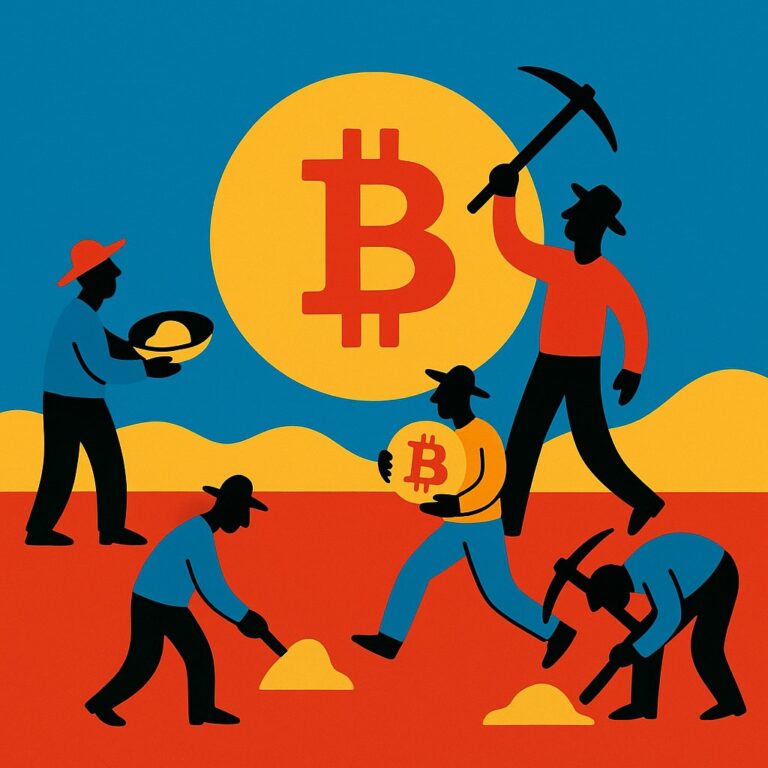
For newcomers, the mechanics can sound arcane. But the basics are simple enough. Bitcoin is digital money that lives on a public record called the blockchain. The blockchain is like a giant notebook that everyone can see but no one can erase. To add a new page of transactions, computers compete to find a special code — a process called mining. This work costs electricity and keeps the system honest.
One bitcoin can be split into 100 million satoshis, so even at today’s $114,000 price tag, you can still buy a coffee with 4,000 sats. And yet Bitcoin is only the beginning.
What crypto investments are there other than bitcoin?
If Bitcoin is digital gold, then Ethereum is digital oil – the fuel powering smart contracts, NFTs, and decentralised finance. Since its launch in 2015, Ethereum has become the second-largest cryptocurrency and the foundation of most blockchain applications. Other contenders have emerged too: Solana (SOL) with its lightning-fast transactions, Chainlink (LINK) which connects blockchains to real-world data, and networks such as Polkadot (DOT) and Cosmos (ATOM) that aim to build an “internet of blockchains.”
The golden rule remains clear: Bitcoin and Ethereum form the core of any crypto landscape. Everything else carries higher risk, but also the possibility of higher reward.
How do you buy crypto
Retail investors don’t need to “mine” coins with computers. Instead, you can buy through brokers and exchanges — many of which are eager to advertise to readers like yours.
Licensed Australian Crypto Exchanges
- CoinSpot
- Independent Reserve (now owned by IG Group)
- Swyftx
- BTC Markets
Global Brokers accessible to Australians
- eToro Australia
- AvaTrade Australia
- IC Markets (CFDs)
- Pepperstone (CFDs)
- FP Markets (CFDs)
- Caleb & Brown (premium crypto brokerage, Melbourne-based)
ETFs and CFDs that invest in crypto
Crypto ETFs (Exchange-Traded Funds)
- U.S. Spot Bitcoin ETFs (approved January 2024): BlackRock, Fidelity, Ark Invest, VanEck.
- Australia:
- BetaShares CRYP ETF (crypto-exposed companies).
- Monochrome Bitcoin ETF (IBTC) (direct exposure).
Crypto CFDs (Contracts for Difference)
Available from brokers including:
- IG Markets
- IC Markets
- Pepperstone
- AvaTrade
- FP Markets
ETFs and CFDs let investors get exposure through normal brokerage accounts – no wallets, no private keys. For many readers, this feels safer.
The problem with crypto are the wild price swings
What sets Bitcoin apart from ordinary investments is not just its returns but its turbulence. Over the past five years, Bitcoin’s annual volatility has hovered between 60 and 100 percent. In plain terms, that means its price has often swung 20–40 percent in a single month, and it has repeatedly suffered drawdowns of 70 to 80 percent during its crashes. By contrast, the S&P 500 and Australia’s ASX 200 have averaged volatility closer to 12–20 percent. Their worst drawdowns in the past five years came during the COVID crash of March 2020, when they fell about 30 percent, nothing like the carnage of Bitcoin’s 2021–22 collapse from $69,000 to $16,000.
This volatility is why Bitcoin can make fortunes quickly but also devastate the unprepared. Yet the arrival of ETFs and the steady inflows of institutional capital may help to dampen some of these wild swings. Pension funds, superannuation managers, and asset managers typically buy with long horizons and hold positions steadily, rather than stampeding in and out on news headlines. That slow, heavy capital could act as ballast, softening future crashes even as it drives new demand.
The energy and environmental issue with crypto
Bitcoin mining is expensive because it deliberately burns energy to secure the network. Critics argue this is wasteful, comparable to the electricity use of Argentina. Supporters counter that miners increasingly use renewable or stranded energy, and that Bitcoin’s consumption is no worse than gold mining or global banking infrastructure. Ethereum solved this debate by switching to Proof of Stake in 2022, cutting its energy use by over 99 percent. Other networks are following suit.
Why crypto is here to stay
From a passing literary term in 1975 to a trillion-dollar asset class in 2025, crypto has gone from cryptic curiosity to digital gold rush. Bitcoin and Ethereum remain the most proven and widely used, with every new ETF, fund, and institutional endorsement pushing them further into the mainstream.
For investors, the promise and peril remain entwined: crypto is three to five times more volatile than stocks, but now anchored by the steady hand of institutional money. The future is likely to bring both surges and setbacks, but one thing is clear – cryptocurrency is no longer a curiosity. It is a permanent part of the financial landscape.