
Are you overpaying on your home loan?
Refinance and save $4,000 – $10,000 per year.
Compare over 40 lenders to get competitive home loans and interest rates.
Check your savings
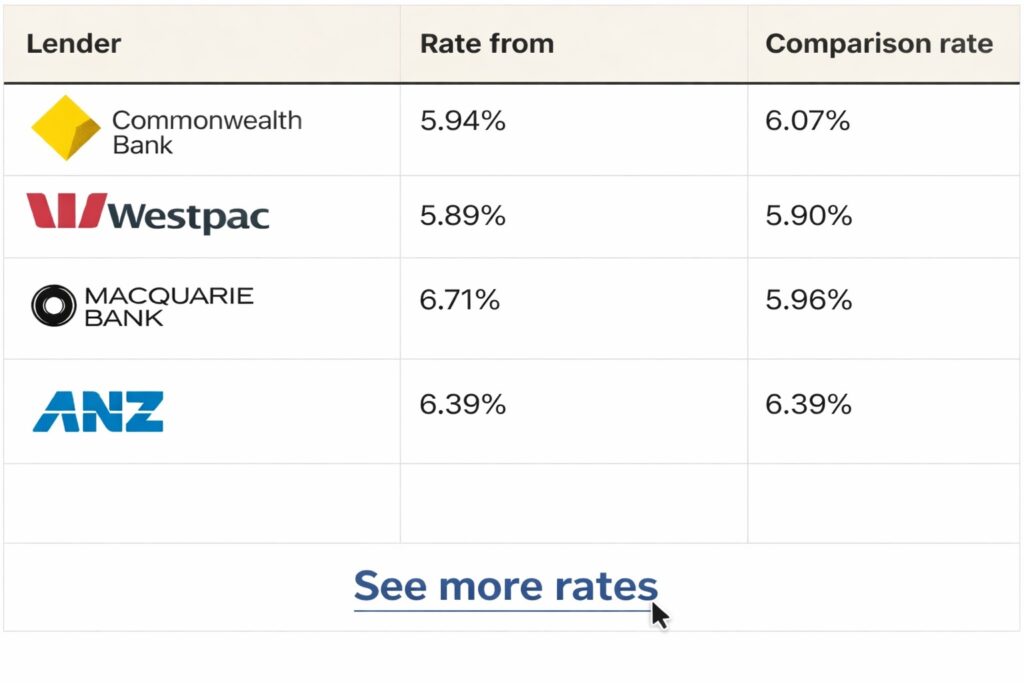
How refinancing works
Refinancing means replacing your current mortgage with a new home loan that offers a lower interest rate or better features. Many Australian homeowners refinance every few years to reduce their repayments or take advantage of cashback offers from lenders.
Even a small difference in interest rate can save thousands over the life of a mortgage.
Potential savings example:
| Loan | Rate | Monthly payment |
| Current loan | 6.45% | $2,870 |
| Refinance loan | 5.85% | $2,610 |
Potential saving: $3,100 per year
Refinancing at a glance
How long does it take to check your options?
Using the comparison tool takes less than 60 seconds.
How long does the application take?
Most refinance applications can be completed in around 10–20 minutes online once you have your details ready.
Are there fees to refinance?
Some loans have discharge or application fees, but many lenders now offer cashback offers or fee waivers, which can offset these costs.
How much can you save by refinancing?
Even a reduction of 0.5 – 1% in interest rate can save thousands of dollars over the life of a mortgage.
Why people refinance…
Check if you’re overpaying on your mortgage
Many Australian homeowners are paying interest rates that are 0.5 – 1% higher than necessary.
Even a small reduction can save thousands per year.
Home loan refinancing FAQs
Refinancing can be worthwhile if you can secure a lower interest rate or better loan features. Even a small reduction in rate can save thousands over the life of a mortgage.
While the application itself can take only minutes, settlement of the new loan typically takes 2–6 weeks depending on the lender and discharge process.
There is no strict limit. Many Australian homeowners refinance every few years when interest rates change or when better loan offers become available.
Most lenders prefer borrowers to have at least 20% equity in their property when refinancing. Equity is the difference between your property’s value and the amount remaining on your mortgage. If you have less than 20% equity, refinancing may still be possible, but you may need to pay Lenders Mortgage Insurance (LMI) or accept a slightly higher interest rate.
Most lenders prefer a good credit history and stable income. However, refinancing options can still exist for borrowers with average credit depending on their equity and repayment history.
Refinancing usually involves a credit check which may cause a small temporary impact on your credit score. However, maintaining repayments on the new loan can improve your credit profile over time.
Refinancing with bad credit can be more difficult, but it is still possible in some cases. Lenders generally look at your overall financial situation, including your income, repayment history, and the amount of equity in your property. Borrowers who have built up equity or who have consistently made their mortgage repayments may still qualify for refinancing options, even if their credit score is not perfect. Comparing lenders can help identify loans that are more flexible with credit requirements.