
Access Equity in Your Home
Unlock the value in your property and access home equity through refinancing or equity loans from Australian lenders.

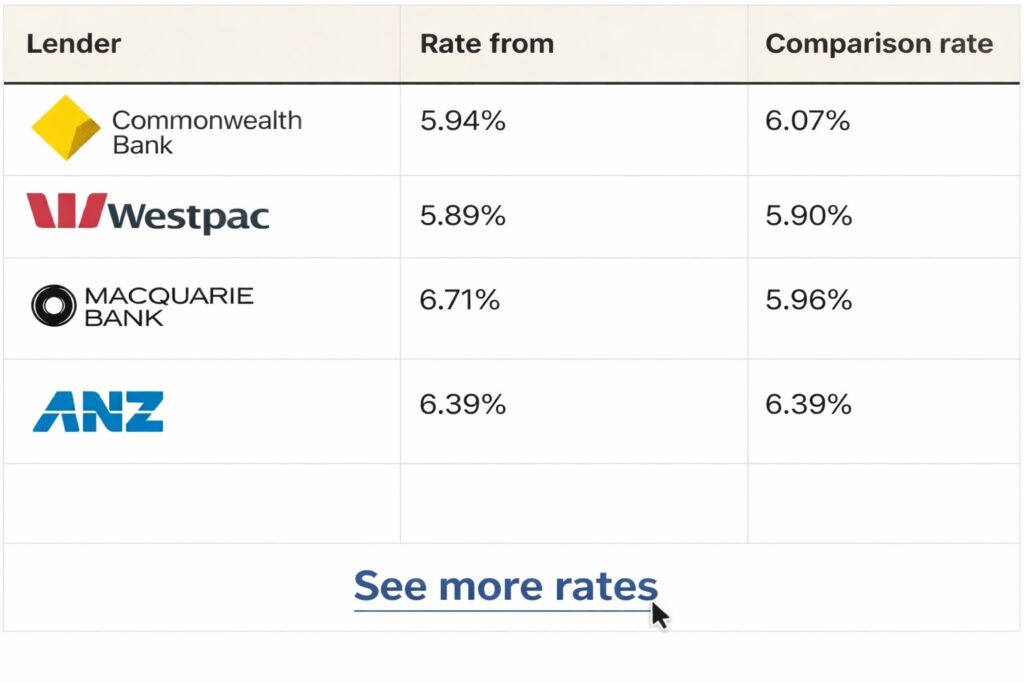
In Australia, equity is typically accessed by refinancing an existing mortgage or increasing the loan balance on a standard home loan. The lenders below offer competitive variable home loans commonly used for equity access.
Compare home equity loans
| Lender | Interest Rate | Comparison Rate | Check my eligibility |
 | 6.09% | 6.47% |  |
 | 6.29% | 6.29% | |
 | 6.54% | 6.74% | |
 | 6.14% | 6.53% | |
 | 6.09% | 6.12% | |
 | 5.84% | 6.09% | |
 | 6.19% | 5.58% | |
 | 5.89% | 6.09% | |
 | 7.08% | 7.49% | |
 | 5.84% | 6.08% | |
How home equity works in Australia
Home equity is the difference between the value of your property and the amount you still owe on your mortgage. As property values rise or your loan balance falls, the equity in your home increases.
Many Australian homeowners use this equity to borrow additional funds without selling their property. This is typically done by refinancing an existing mortgage or increasing the loan balance on a standard home loan.
For example, if a home is worth $900,000 and the remaining mortgage is $400,000, the owner has $500,000 in equity. Lenders generally allow borrowers to access a portion of that equity, depending on the loan-to-value ratio (LVR) and their financial situation.
Accessing equity can provide a flexible source of funding for renovations, property investment, debt consolidation, or major expenses.
Why homeowners access equity
Borrowing against home equity can be useful because interest rates on home loans are usually lower than other forms of borrowing such as personal loans or credit cards.
Common reasons people access equity include:
Renovations and home improvements: Many homeowners use equity to upgrade kitchens, bathrooms, or extensions that may increase the property’s value.
Buying an investment property: Equity is often used as a deposit for a second property, allowing investors to enter the market without needing a large cash deposit.
Debt consolidation: Some borrowers use equity to combine higher-interest debts, such as credit cards or personal loans, into a single lower-rate home loan.
Major life expenses: Equity can sometimes be used to fund education costs, medical expenses, or other large purchases.
Refinancing to a better loan: Some homeowners refinance to a new lender while also accessing additional equity from their property.
How much equity can you access?
The amount of equity available depends on several factors, including your property value, current mortgage balance, and lender policies.
Most Australian lenders allow borrowing up to 80% of the property’s value without lenders mortgage insurance (LMI).
Example:
Property value: $900,000
Maximum borrowing at 80% LVR: $720,000
Current mortgage: $400,000
Potential accessible equity: $320,000
Some lenders may allow borrowing up to 90% LVR, but this usually requires paying lenders mortgage insurance.
Loan-to-value ratio (LVR) explained
The loan-to-value ratio measures how much you are borrowing compared with the value of your property.
LVR formula: Loan amount ÷ property value × 100
Example:
Loan balance: $400,000
Property value: $900,000
LVR = 44%
Lower LVRs generally mean:
- lower interest rates
- better loan options
- easier approval
Lenders often prefer borrowers to remain below 80% LVR.
Ways to access home equity
There are several ways homeowners typically access equity.
Refinancing your mortgage: You replace your existing loan with a new home loan and increase the loan balance to release equity.
Loan increase with your current lender: Your bank may allow you to increase the size of your current mortgage based on the property value.
Split loans: Some borrowers create a separate loan split secured against the same property, often used for investment deposits.
Who typically uses home equity?
Equity borrowing is most common among:
- homeowners who have owned property for several years
- investors building a property portfolio
- borrowers refinancing to improve loan terms
- homeowners funding renovations
Because property values in many Australian cities have risen over time, many long-term homeowners have built significant equity in their properties.
Things to consider before accessing equity
Borrowing against your home increases the size of your mortgage and the amount of interest paid over time.
Before accessing equity, consider:
- your ability to manage higher repayments
- the purpose of the borrowing
- long-term financial goals
- the risks of property price changes
A mortgage specialist can help assess borrowing capacity and loan options based on your situation.
Checklist: accessing equity from your home
Before applying to access equity, it can help to prepare the following information:
- current mortgage balance
- estimated property value
- income and employment details
- existing debts or loans
- purpose of the equity borrowing
Lenders will usually assess both the value of the property and the borrower’s ability to service the loan.
Home equity is the difference between your property’s market value and the amount remaining on your mortgage. If your property is worth $800,000 and your loan balance is $500,000, you have $300,000 in equity.
Most homeowners access equity by refinancing their mortgage or increasing their existing loan with their lender. This allows them to borrow against the value of their property.
Many lenders allow borrowing up to 80% of a property’s value without lenders mortgage insurance. The exact amount depends on your income, loan balance, and the lender’s policies.
Yes. Many investors use equity as a deposit for purchasing an investment property, which allows them to enter the market without needing a large cash deposit.
Borrowing against your home increases your loan balance and repayment obligations. If property values fall or repayments become difficult, this can create financial pressure.
Yes. Accessing equity typically increases the size of your home loan or creates a new loan split secured against your property.
Not always. Some lenders allow a loan increase without changing lenders, although refinancing can sometimes provide better interest rates or loan features.
Usable equity is the portion of equity lenders allow you to borrow. Many lenders limit borrowing to around 80% of the property value.