Breaking News



Popular News




Enter your email address below and subscribe to our newsletter
 Bynewtimes
Key thoughts
Most people who trade the market imagine they’re future-proofing their ideas. They change indicators, tweak timeframes, sharpen signals, tighten stops – and somewhere between midnight and their third coffee, they end up convinced they’ve built the blueprint for compounding wealth.
This moment of certainty is usually an illusion.
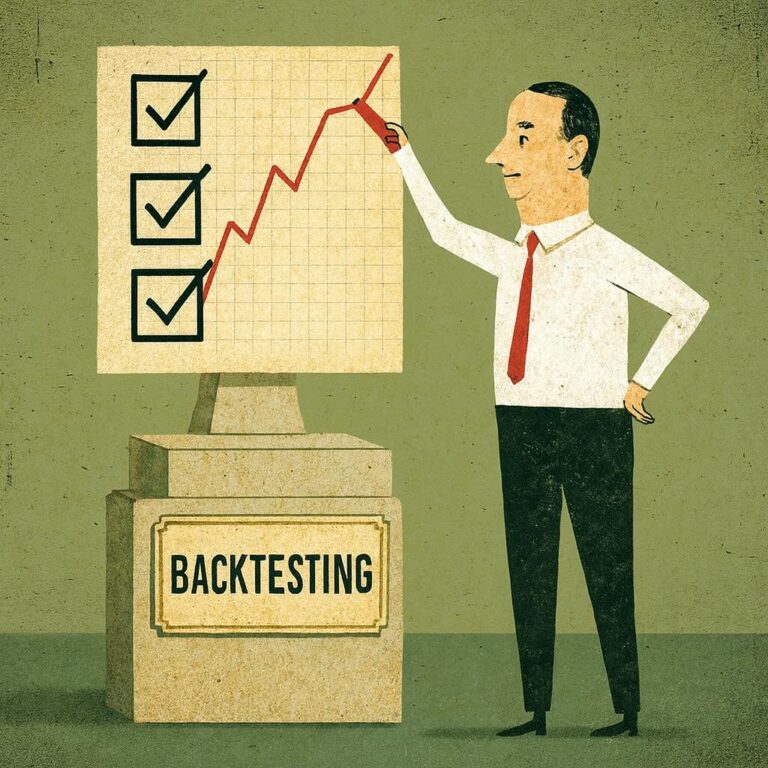
Backtesting exists to puncture that illusion. It’s the process of taking a trading idea and running it against historical market data to see whether it holds up or falls apart. In theory, it’s one of the most rational tools a trader can use.
In reality? Most traders misuse it, misunderstand it, or skip it entirely.
Globally, surveys from brokers and trading platforms show a split reality:
Australian numbers mirror this. Brokers offering MT4/MT5 can see how often the Strategy Tester is used – and it’s surprisingly low. Most retail traders rely on instinct, gut feel, or visual pattern recognition. Backtesting requires rules, and many traders don’t want their instincts tested.
The ones who do backtest tend to be:
In other words, the people who are most disciplined.
Backtesting works when:
Backtesting fails when:
Most backtested strategies collapse when traded live because the trader optimised them too perfectly for conditions that no longer exist. However, even imperfect backtesting dramatically improves discipline, reduces emotional trading, and helps traders avoid catastrophic risk events.
In short: backtesting doesn’t guarantee profits, but it does reduce the chance of disaster.
Among professional traders, backtesting is not a gimmick. It’s the foundation of:
When you buy a momentum ETF or a rules-based portfolio, you are literally buying the results of large-scale institutional backtesting.
Among retail traders, however, backtesting can become gimmicky – especially when platforms market it as a magic formula.
The truth is much simpler: Backtesting is a tool, not a shortcut. It’s not a prediction engine – and certainly not a guarantee. Its power depends entirely on the trader using it.
It depends on the platform.
These allow traders to test basic strategies almost instantly. However, two traders can trade the same system and get wildly different results because:
Backtesting is not about discovering a hidden formula. It’s about behaving consistently when the market turns irrational.
There are no universally accepted percentages or performance stats because strategies vary wildly. But the research is clear on two fronts:
Studies of forex and CFD traders show that rule-based traders with tested strategies last longer, trade smaller, and suffer fewer blow-ups.
When a trader has seen a strategy’s worst drawdown during testing, they are less likely to panic. Even if the performance edge is modest, the psychological edge is significant.

 English