Breaking News



Popular News



Enter your email address below and subscribe to our newsletter
 Bynewtimes
Major Points to Learn
Every trader has a moment when a chart seems to whisper a pattern: a breakout, a reversal, a clean trend line. It feels promising – maybe even obvious. But the problem is always the same: How do you know this “signal” actually works?
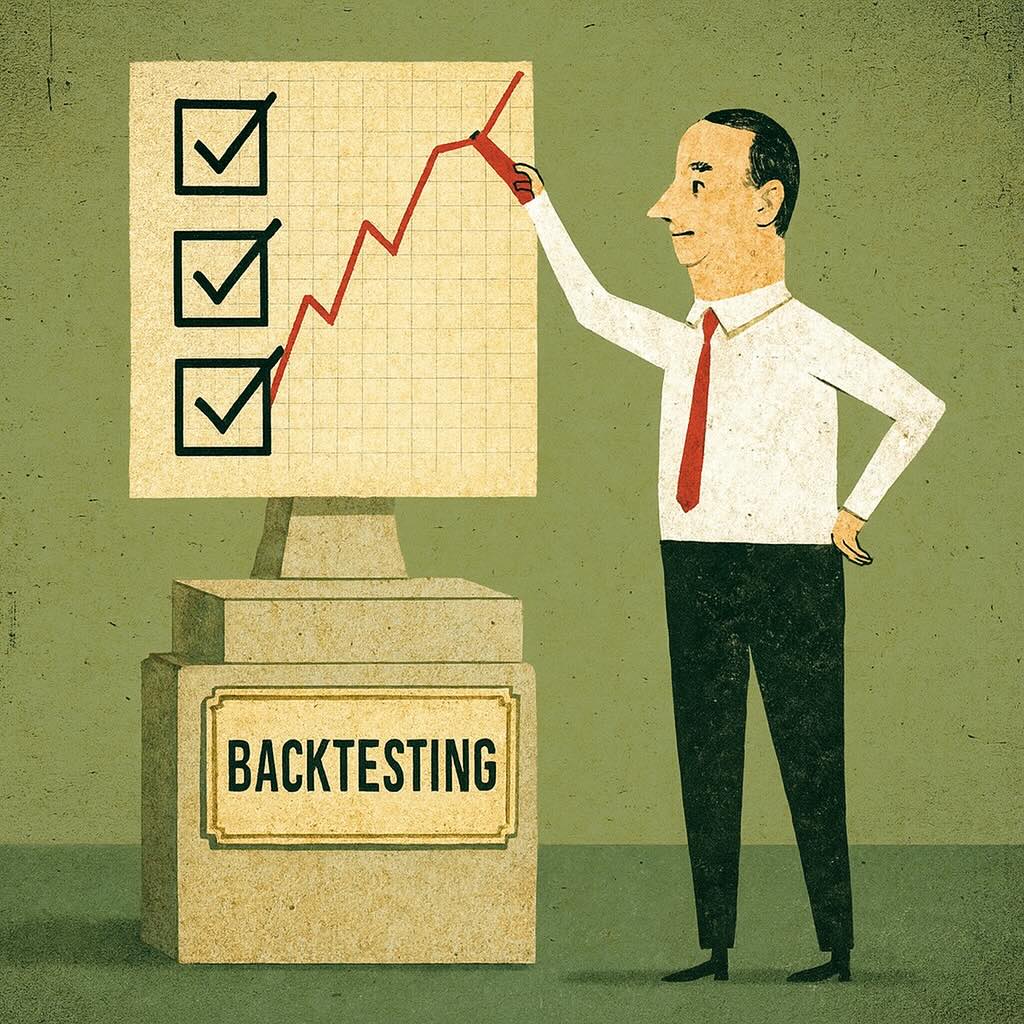
Backtesting is the answer. It is the disciplined habit of taking a trading idea and running it against years – or decades – of historical price data to see if it would have made money. If the idea performs well on old data, it has a chance of working in the future. If it falls apart, you’ve saved yourself a costly lesson.
The best investors in the world – from quantitative hedge funds to systematic ETF providers – rely on backtesting precisely because humans are poor judges of patterns. We remember the wins, forget the losses, and assume the future will look like the last chart we saw. Backtesting cuts through the noise and gives you numbers, not instincts.
At its heart, backtesting is simple:
A strategy can be as basic as “Buy the ASX 200 whenever the price crosses above the 200-day moving average and sell when it crosses below” or “Buy EUR/USD when the 20-day moving average crosses above the 50-day moving average.”
Whatever the rule is, the backtest tells you:
These numbers reveal something few traders expect: most ideas don’t work. And that’s the point. A bad strategy exposed in a backtest is a strategy not traded with real money.
Markets move in messy, noisy ways. A trader might spot a pattern that worked beautifully last month but fails instantly when conditions shift. Backtesting shows whether the idea survives across a wide range of environments – not just one lucky period.
If your system says “Sell,” you sell. If it says “Sit out,” you sit out. Emotional trading – fear of missing out, panic selling, revenge trading – kills returns. A tested system holds you accountable.
Backtesting shows you the worst-case scenario your strategy has faced in the past. That number – called the maximum drawdown – tells you how big your position should realistically be.
Imagine you run a simple mean-reversion strategy on the ASX 200. The backtest shows that during the 2020 COVID crash, the system would have fallen 35% from its peak. If you were planning to trade $20,000, that drop would have turned into a $7,000 loss.
Knowing this beforehand stops you from trading too big. Instead of guessing, you can scale the position to a level you can actually tolerate – emotionally and financially. Backtesting gives you that visibility before you risk a dollar in live markets.
Most good backtests reveal that small changes in behaviour – removing late entries (getting into a trade after the ideal signal has already happened, when most of the opportunity has already moved), adding stop-losses, controlling leverage – dramatically improve results.
With online brokers, CFDs, leveraged ETFs, and crypto platforms everywhere, retail traders often compete against algorithms. Backtesting doesn’t turn you into a hedge fund, but it gives you a process those algorithms recognise: structured decision-making rather than guesswork.
A trader sees a chart and designs rules around what obviously happened. This produces perfect past results and terrible future ones. Genuine backtesting requires rules created before seeing the results – just like real trading.
This happens when traders tweak their strategy so precisely to the historical data that it becomes a statistical Frankenstein. It “fits” the past perfectly but collapses the moment markets change.
The solution is to prefer simple, robust rules that work OK across long periods, rather than perfect rules that work exceptionally well for one short era.
Brokerage fees, spreads, and slippage matter – especially in high-frequency or short-term systems. A strategy that looks excellent before costs can be unprofitable after them.
A strategy that works only during bull markets is not a strategy. True edge holds through volatility.
The most basic form – scrolling through charts and marking buy/sell signals. Useful for beginners, but limited and prone to bias.
Downloading ASX or global data into Excel or Google Sheets to simulate trades. Good for simple rules; still time-intensive.
A large number of brokers provide some form of backtesting, chart testing, or strategy simulation, either inside their own platform, through MetaTrader’s Strategy Tester, or
through TradingView integration.
Backtesting doesn’t replace analysis – it sharpens it. It allows you to explore questions that every trader should ask:
A good backtest gives you clarity. A great backtest gives you confidence. And for retail traders trading with their own capital – confidence grounded in evidence is priceless.
Backtesting works because it strips trading of ego. The market doesn’t reward clever theories or passionate convictions. It rewards ideas that have withstood stress, time, and volatility.
If the numbers hold up, trade it.
If they don’t, let it go.
Backtesting keeps you honest – and in markets that punish emotion, that honesty is an edge of its own.

 English