Breaking News




Popular News




Enter your email address below and subscribe to our newsletter
Find lower interest rates, reduce monthly repayments, and compare refinance offers from Australian lenders.
Explore deposit options, government schemes, and home loan choices for first home buyers in Australia.
Compare loan options for investment properties, rental income, and borrowing strategies for investors.
Mortgage rates in Australia change regularly based on movements in the cash rate set by the Reserve Bank of Australia and competition between lenders.
| Lender | Rate from | Comparison rate | Loan Type | Check your eligibility |
 | 5.84% | 6.22% | Variable |  |
 | 5.49% | 5.50% | Variable | |
 | 5.59% | 5.61% | Variable | |
 | 6.74% | 6.74% | Variable | |
 | 5.94% | 5.98% | Variable | |
 | 5.64% | 5.67% | Variable | |
 | 5.72% | 6.08% | Variable | |
 | 5.63% | 5.65% | Variable | |
 | 5.64% | 5.77% | Variable | |
MORTGAGE GUIDE
MORTGAGE GUIDE
MORTGAGE GUIDE
MORTGAGE GUIDE
Australian lenders offer a range of different home loan types designed for different borrowers and financial situations. Understanding how these loans work can help borrowers choose a mortgage that suits their long-term goals, whether they are buying their first home, refinancing an existing mortgage, or investing in property.
Most home loans fall into several broad categories, including variable rate loans, fixed rate loans, split loans, and loans with features such as offset accounts or redraw facilities.
VARIABLE RATE
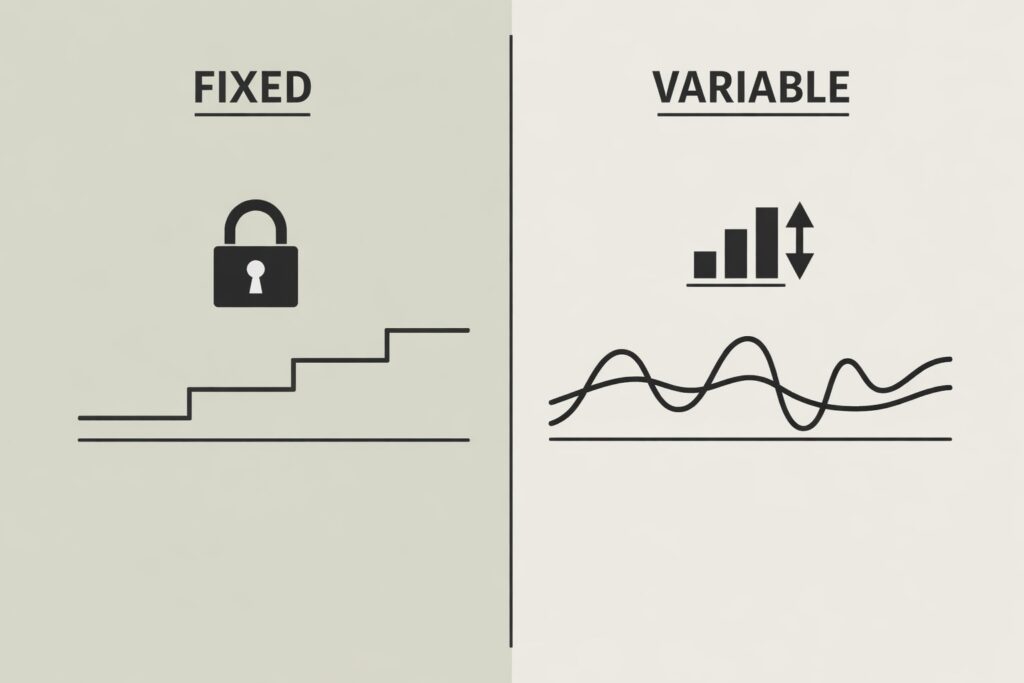
Variable home loans are the most common type of mortgage in Australia. The interest rate can move up or down over time, usually following changes to the cash rate set by the Reserve Bank of Australia or adjustments by lenders.
Because the rate can change, repayments may increase or decrease during the life of the loan.
Variable loans often include useful features such as:
These features make variable loans popular with borrowers who want flexibility or who expect interest rates to fall in the future.
FIXED RATE
Fixed rate home loans lock in the interest rate for a set period, typically between one and five years. During this fixed term, the borrower’s repayments remain the same regardless of changes in market interest rates.
This provides certainty for budgeting and financial planning.
However, fixed loans usually have fewer flexible features. For example, they may limit additional repayments and may charge break fees if the borrower exits the loan early.
Borrowers often choose fixed rates when interest rates are low or when they want predictable repayments.
INTEREST ONLY
Interest-only loans allow borrowers to pay only the interest portion of the loan for a set period, usually between one and five years.
During this time the principal (the amount borrowed) does not reduce.
These loans are commonly used by property investors who may wish to maximise tax deductions or improve short-term cash flow. After the interest-only period ends, the loan typically converts to principal and interest repayments.
PRINCIPAL & INTEREST
Most owner-occupiers use principal and interest loans. With this type of mortgage, each repayment reduces both the interest and the loan balance.
Over time, this gradually builds equity in the property.
Principal and interest loans are generally considered the standard form of home loan in Australia and often offer the most competitive interest rates.
OFFSET ACCOUNTS
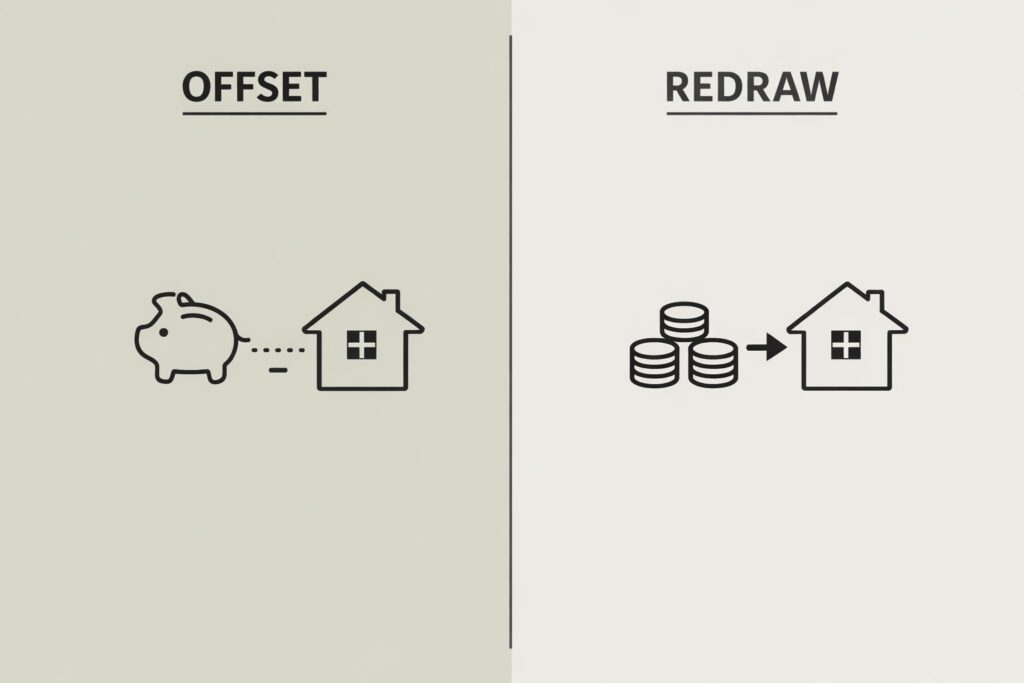
An offset account is a transaction account linked to a home loan. The balance of the offset account is used to reduce the interest charged on the loan.
For example, if a borrower has a $500,000 loan and $50,000 in the offset account, interest is calculated on $450,000.
Offset accounts can significantly reduce interest costs over the life of the loan.
REDRAW FACILITIES
A redraw facility allows borrowers to access extra repayments they have made on their loan.
If a borrower pays more than the required repayment, those additional funds can often be withdrawn later if needed.
Redraw facilities provide flexibility while still allowing borrowers to reduce their loan balance.
SPLIT LOANS
A split loan combines both fixed and variable interest rates within the same mortgage.
For example, a borrower might fix half of the loan for stability while keeping the other half variable to maintain flexibility.
Split loans can provide a balance between certainty and flexibility, allowing borrowers to hedge against interest rate changes.
CONSTRUCTION LOANS
Construction loans are designed for people building a new home rather than buying an existing property.
Funds are released progressively during different stages of construction, such as the foundation, frame, and completion stages.
Borrowers typically pay interest only on the amount that has been drawn down during construction.
Choosing the right home loan is one of the most significant financial decisions most Australians will make. A difference of even 0.25% in interest rate can translate into tens of thousands of dollars over the life of a mortgage. Yet the lowest advertised rate is rarely the whole story.
The best home loan for one borrower may be unsuitable for another. Factors such as deposit size, employment type, property use, and cash flow needs all influence which loan structure is appropriate. Fixed or variable? Offset or redraw? Principal and interest or interest-only? These decisions matter just as much as headline rates.
At New Times, we take an editorial approach to home loan comparison. We assess loans based not only on advertised rates, but on comparison rates, fees, flexibility, offset functionality, and refinancing value. We are not a lender. Instead, we connect readers with licensed mortgage brokers who can assess individual circumstances and identify suitable options across multiple lenders.
The best home loan depends on several factors, including the borrower’s financial situation, risk tolerance, and long-term plans.
When comparing home loans, borrowers should consider:
Understanding the different types of home loans available can help borrowers choose a mortgage that suits their needs and avoid unnecessary costs over the life of the loan.

Comparison tables are a useful starting point. They allow borrowers to scan headline rates, comparison rates and basic features quickly. But a mortgage is not a shelf product. It is a structured financial contract assessed against your individual income, debts, deposit size and long-term plans.
Two loans displaying the same comparison rate may deliver very different outcomes depending on how a lender treats overtime, bonus income, rental yield, self-employment history or existing liabilities. Serviceability buffers, valuation approaches and policy nuances are rarely visible in a table – yet they can determine whether an application is approved and how much you can borrow.
Features also matter. Offset accounts, redraw flexibility, fee structures and refinancing terms influence the true cost of a loan over time. A marginally higher rate with greater flexibility may prove more economical in practice.
For this reason, comparison tables should inform your research, not conclude it. The most effective approach is to review the market – and have the right questions .
We assess home loans using a combination of pricing, structure and policy considerations. A competitive rate is important, but it is only one component of overall value.
Interest rates: We consider headline variable and fixed rates, as well as how those rates compare within the broader market. We focus on consistently competitive pricing rather than short-term promotional offers.
Comparison rate: The comparison rate reflects certain fees and charges built into the cost of the loan. While not perfect, it provides a more realistic indicator of total borrowing cost than the advertised rate alone.
Fees: We review application fees, ongoing account-keeping fees, discharge fees and break costs. Even small ongoing charges can materially affect long-term value.
Offset and redraw flexibility: Access to an offset account or flexible redraw facility can reduce interest costs and improve cash flow management. We assess whether these features are included and how they operate in practice.
Repayment flexibility: We consider whether borrowers can make additional repayments without penalty, split loans between fixed and variable components, or restructure as circumstances change.
Policy strength for different borrowers: Lending policies vary. We assess how different lenders treat self-employed income, rental income, bonuses, debt levels and property types. A loan’s suitability often depends as much on policy fit as on rate.
Home loan guide:
A comparison rate is designed to show the true cost of a home loan by including both the interest rate and most fees. While the interest rate shows the base cost of borrowing, the comparison rate includes additional charges such as application fees and ongoing fees. This makes it easier for borrowers to compare different home loan products more accurately.
A fixed rate home loan locks in your interest rate for a set period, usually one to five years, meaning your repayments remain stable during that time. A variable rate home loan can move up or down depending on changes in interest rates. Variable loans often offer more flexibility, such as offset accounts and extra repayments.
Whether a fixed or variable home loan is better depends on your financial goals and risk tolerance. Fixed loans offer repayment certainty and protection from rising interest rates, while variable loans may provide more flexibility and the chance to benefit if interest rates fall.
An offset account is a transaction account linked to your home loan. The balance in the offset account reduces the amount of interest charged on your loan. For example, if you have a $500,000 mortgage and $20,000 in your offset account, you may only be charged interest on $480,000.
A redraw facility allows you to withdraw extra repayments you have made on your home loan. This can provide flexibility if you need access to those funds later. However, redraw rules vary between lenders, and some loans limit how much you can withdraw.
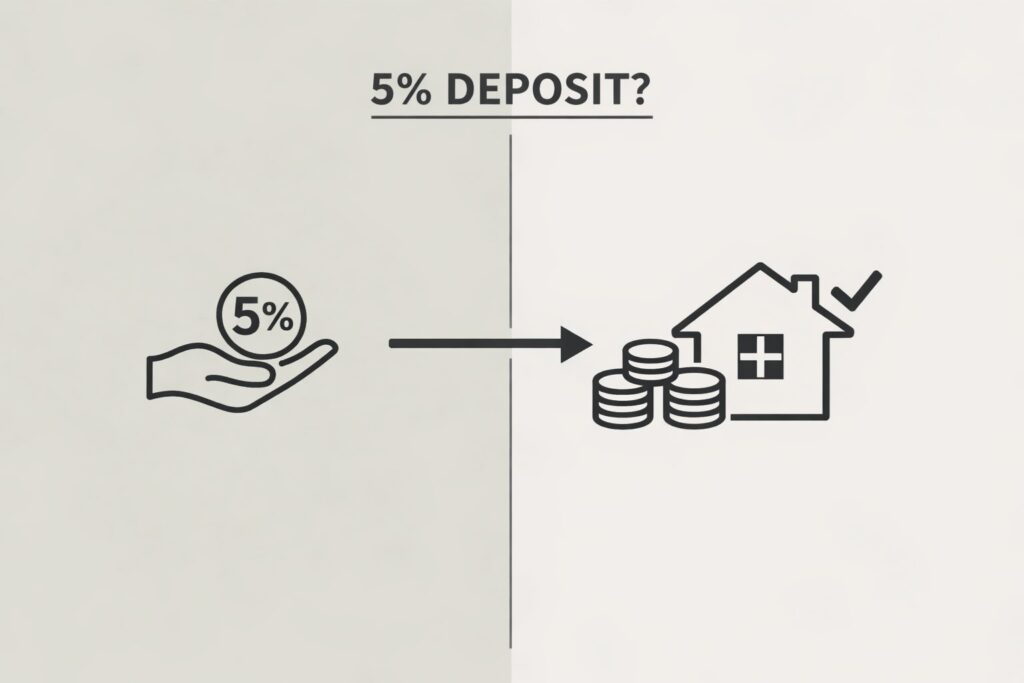
Most lenders prefer borrowers to have a 20% deposit to avoid paying Lenders Mortgage Insurance (LMI). However, some buyers can purchase a property with deposits as low as 5%, particularly if they qualify for government first home buyer schemes.
Lenders Mortgage Insurance is a fee charged when borrowers have a smaller deposit, usually less than 20% of the property value. LMI protects the lender rather than the borrower and can add thousands of dollars to the total cost of a home loan.
Not necessarily. The lowest advertised home loan rates are typically reserved for borrowers with strong financial profiles, larger deposits, and lower loan-to-value ratios. Your actual interest rate may vary depending on your income, credit history, property type, and loan size.
Home loan comparison tables allow borrowers to quickly compare interest rates, comparison rates, loan types, and lender features across multiple banks. These tables help you identify competitive offers and understand how different loans stack up before speaking with a lender or broker.
Variable home loan interest rates can change whenever lenders adjust their rates, often following changes to the Reserve Bank of Australia’s cash rate. Fixed rate loans remain stable during the fixed period, but new fixed offers may change regularly.
Yes. Many homeowners refinance their home loan to access lower interest rates, reduce repayments, consolidate debt, or unlock equity in their property. Refinancing involves switching to a new loan, either with your current lender or a different lender.
The amount you can borrow depends on factors such as your income, expenses, debts, credit history, and deposit size. Lenders also apply affordability assessments to ensure you can manage repayments even if interest rates rise.
Home loans may include several fees such as application fees, valuation fees, settlement fees, and ongoing account fees. Some lenders also charge discharge fees if you refinance or close the loan early.
Mortgage brokers can compare home loan options across multiple lenders and help you navigate the application process. Going directly to a bank may limit your options to that lender’s products, while brokers may provide a wider comparison.
Home loan approval times vary between lenders but often take between a few days and several weeks, depending on the complexity of the application, property valuation, and supporting documentation required.
 English