Breaking News



Popular News


Enter your email address below and subscribe to our newsletter
Find out how much you can borrow and compare first home loan rates from over 40 lenders.

A first home buyer loan is a home loan designed for people purchasing their first property. In most cases, the structure of the loan is similar to any standard mortgage – you borrow money from a lender (such as a bank) and repay it over time with interest – but first home buyers often have access to special government schemes, lower deposit options, and tailored lending support.
When you buy your first home, there are three key factors that determine how the loan works: your deposit, the lender you choose, and your borrowing capacity.
Your deposit is the portion of the property price you contribute yourself. Traditionally, lenders preferred borrowers to have a 20% deposit, which avoids paying Lenders Mortgage Insurance (LMI).
However, many first home buyers enter the market with smaller deposits, sometimes as low as 5%, particularly if they qualify for government programs such as the First Home Guarantee in Australia.
For example:
Property price: $700,000
20% deposit: $140,000
5% deposit: $35,000
A larger deposit generally means lower repayments and less risk for the lender, which can improve the interest rate you are offered.
First home buyer loans are available through banks, credit unions, non-bank lenders, and mortgage brokers. Each lender has different lending policies, interest rates, and eligibility requirements.
Some lenders specialise in helping first home buyers and may offer features such as:
Because lending rules vary widely, comparing lenders or speaking with a broker can often reveal better borrowing options than applying to a single bank directly.
Your borrowing capacity is the amount a lender is willing to lend you. This depends on several factors, including:
Lenders assess whether you can still afford repayments if interest rates rise, which is why borrowing limits are often lower than buyers initially expect.
Understanding your borrowing capacity early can help you set a realistic budget and focus on properties within your range, before beginning the home search.
Find out your borrowing capacity and compare rates from over 40 lenders.
In Australia, several government programs are designed to help first home buyers enter the property market. These schemes can reduce the upfront costs of buying a home, particularly the size of the deposit required and the amount of stamp duty payable.
While eligibility rules and property price caps vary between states, the most common forms of assistance include cash grants, deposit guarantees, and stamp duty concessions.
The First Home Owner Grant is a one-off payment provided by state and territory governments to eligible first home buyers.
In many states, the grant is typically available when buying or building a newly constructed home, rather than an existing property. The amount varies depending on the state but is often around $10,000, although higher amounts may apply in some regions or under specific programs.
Eligibility usually requires that:
Because rules differ across states, it is important to check the specific requirements where you plan to buy.
The First Home Guarantee is a federal government scheme that allows eligible buyers to purchase a home with as little as a 5% deposit without paying Lenders Mortgage Insurance (LMI).
Normally, buyers with a deposit below 20% must pay LMI, which can add many thousands of dollars to the cost of a loan. Under the guarantee, the government effectively acts as a guarantor for part of the loan, reducing the risk to the lender.
Key features include:
Places in the scheme are limited each year and must be accessed through participating lenders.
Stamp duty is one of the largest upfront costs when buying property, but many states provide stamp duty concessions or exemptions for first home buyers.
Depending on the state and the property price, first home buyers may receive:
Because stamp duty can sometimes amount to tens of thousands of dollars, these concessions can significantly reduce the cost of purchasing a first home.
Government programs can make a meaningful difference to the affordability of buying your first property, particularly when combined with savings for a deposit. However, eligibility criteria and availability can change, so it is important to check the latest requirements or speak with a lender or broker before relying on a specific scheme.
Yes. Many first home buyers can purchase a property with as little as a 5% deposit through government programs such as the First Home Guarantee. Normally borrowers with deposits below 20% must pay Lenders Mortgage Insurance (LMI), but under this scheme the government guarantees part of the loan, allowing eligible buyers to avoid that cost.
Traditionally lenders preferred a 20% deposit, but many first home buyers enter the market with deposits between 5% and 10%. A larger deposit reduces the loan amount and may improve the interest rate offered by lenders.
The amount you can borrow depends on your income, existing debts, living expenses, employment stability, and interest rate buffers used by lenders. Most lenders also assess whether you could still afford repayments if interest rates increased.
Several programs may help reduce the cost of buying a first home, including:
Eligibility depends on income, property price limits, and whether the property is new or existing.
In many states, first home buyers may receive stamp duty concessions or exemptions, depending on the property price and location. These concessions can reduce or eliminate stamp duty costs, which are often one of the largest upfront expenses when buying property.
Lenders Mortgage Insurance protects the lender if a borrower defaults on the loan. It is typically required when a deposit is less than 20% of the property value. Some government programs allow eligible buyers to avoid LMI even with a smaller deposit.
Yes. Some lenders offer family guarantor loans, where parents or close family members use equity in their own property to help secure the loan. This can allow buyers to purchase a home with little or no deposit, although guarantors take on financial risk..
Home loan approval usually occurs in two stages:
The full process can take one to three weeks, depending on the lender.
Pre-approval is an initial assessment from a lender indicating how much they may be willing to lend. It helps buyers understand their budget before searching for a property and can strengthen offers when negotiating with sellers.
In addition to the deposit, buyers should budget for several upfront costs, including:
These expenses can add thousands of dollars to the cost of buying a home.
Under the First Home Super Saver Scheme, eligible buyers may be able to withdraw voluntary super contributions to help with a home deposit. There are limits on how much can be withdrawn and specific eligibility requirements.
Yes. Self-employed borrowers can qualify for home loans, but lenders usually require two years of financial records or tax returns to confirm income. Some lenders offer alternative documentation loans for certain situations.
Borrowing capacity may increase by:
Even small changes can significantly affect how much lenders are willing to lend.
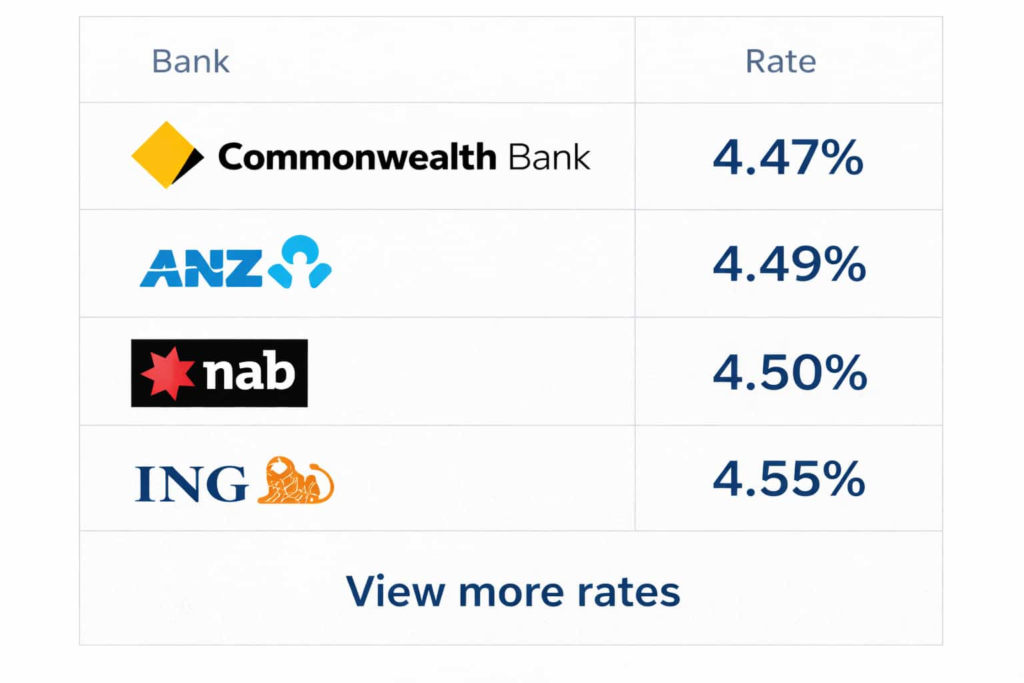
Interest rates vary between lenders and depend on factors such as the loan size, deposit, credit profile, and loan features. Rates change frequently as the Reserve Bank adjusts monetary policy.
A mortgage broker can compare loans from multiple lenders and help identify suitable options based on your financial situation. Some buyers prefer brokers because they provide access to a wider range of lenders, while others choose to apply directly with a bank.
.
Typical deposit:
• 5% with government guarantee
• 10% with LMI
• 20% avoids LMI
Typical loan term:
• 25–30 years
Average mortgage rate (variable):
• around 5 – 6% depending on lender
Minimum savings many lenders prefer:
• $20,000 -$40,000+
Property price: $700,000
Many first home buyers enter the market with deposits between 5% and 10% using government guarantees.
What lenders look at:
Income: salary, commissions, bonuses, rental & investment income (Overtime and bonuses may only be partially counted unless consistent over time).
Existing debts: credit cards (even if unused), personal and car loans, HECS/HELP
Lenders assess the full credit limit, not the balance – a $10,000 limit can reduce borrowing power even if unused. Buy now, pay later services such as Afterpay, Zip may be counted as debt.
Living expenses: food, transport, utilities, insurance, subscriptions, childcare costs (lenders review bank statements for regular spending habits)
Employment stability: full-time or consistent income (many lenders prefer at least 6–12 months in the same job).
Interest rate buffer: lenders test your ability to repay if rates rise.
Eligibility for government assistance programs usually depends on a few key factors, including your income, the price of the property, where you are buying, and whether you have previously owned property.
Some schemes are run by the federal government, while others are administered by state governments, so the rules can vary depending on where you live.
Most programs assess things such as:
Because the rules differ between states and lenders, many first home buyers only learn exactly which schemes they qualify for when they speak with a lender or mortgage broker.
In many cases, lenders and mortgage brokers will automatically check your eligibility for available government schemes as part of the home loan application process, so you do not usually need to apply for each program separately.
 English